Let’s be honest—the digital world is spilling out of our screens. It’s no longer just in front of us; it’s all around us. That’s the promise, and the challenge, of spatial computing. Think of it as the next logical, yet utterly revolutionary, step after the mobile internet.
For business leaders, this isn’t just about cool AR glasses or virtual showrooms. It’s a fundamental shift in how we interact with data, with customers, and even with our own teams. The question isn’t if it will impact your operations, but how soon and how deeply. So, let’s dive into the operational strategies that will separate the pioneers from the spectators in this new spatial era.
Rethinking the Core: Spatial-First Operational Mindset
First things first. You can’t bolt spatial computing onto a 2D business model and expect magic. The initial strategy is, well, mental. It requires a spatial-first mindset. This means envisioning processes not as flowcharts, but as immersive, three-dimensional experiences.
Imagine your warehouse picker not staring at a handheld scanner, but seeing glowing digital pathways on the floor and floating indicators above the correct bin. Or your field technician looking at a complex machine and seeing its maintenance history, thermal data, and repair instructions layered directly onto its components. The data isn’t referenced; it’s contextualized. That’s the core shift.
Key Pillars of a Spatial Operations Strategy
Okay, mindset in place. Now, where do you start? Focus on these three pillars to build a tangible strategy.
1. Augmented Workforce & Hyper-Efficiency
This is the low-hanging fruit, honestly. Spatial computing is a powerhouse for enhancing human capability. The goal here is to reduce cognitive load and error rates while speeding up complex tasks.
- Remote Expert Guidance: A senior engineer in Berlin can see what a junior tech in Brisbane sees, and literally draw instructions into their shared field of view. This slashes travel costs and downtime.
- Hands-Free Information Access: Manuals, schematics, and real-time data appear where the work is happening. This is a game-changer for manufacturing, logistics, and surgery.
- 3D Data Visualization: Instead of interpreting 2D graphs, managers can “walk into” a data model of a supply chain or a financial forecast, spotting bottlenecks intuitively.
2. Immersive Customer Journeys & Prototyping
Here’s where things get exciting for customer-facing ops. Spatial computing blurs the line between discovery and possession.
For retail, it means virtual try-ons for clothes or seeing how that sofa really fits in your living room—down to the millimeter. For automotive, it’s configuring a car and then taking it for a test drive on a virtual coastal highway. The operational impact? Reduced return rates, higher conversion, and a dramatic reduction in the need for physical inventory and showroom space.
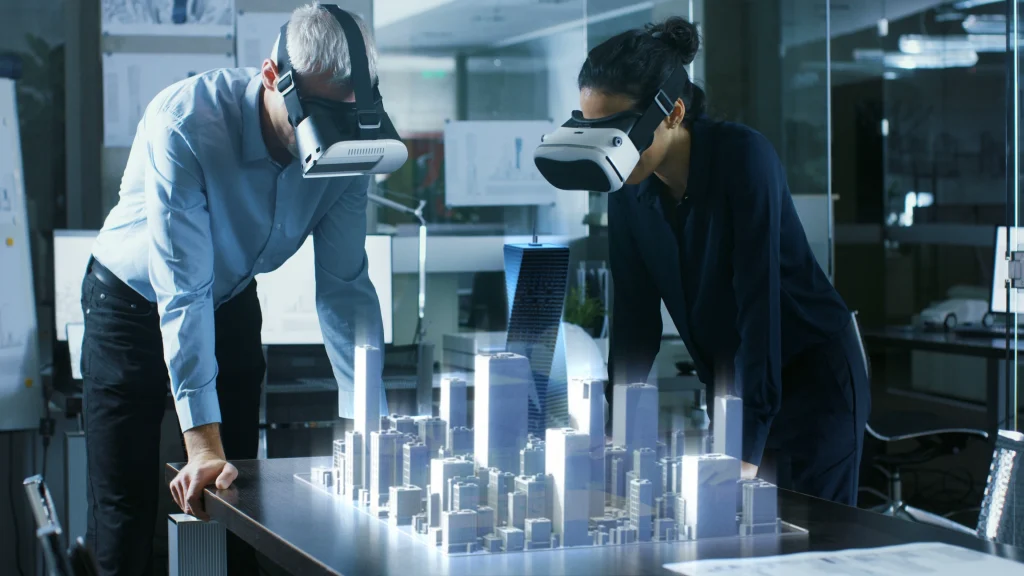
And prototyping? Design and engineering teams can collaborate on life-size 3D models, making iterations in real-time without a single physical prototype. The cost and time savings are, frankly, staggering.
3. The Spatial Backoffice & Distributed Collaboration
The “office” becomes a persistent virtual space. This is more than a Zoom grid. It’s a shared environment where your team—scattered across the globe—can interact with 3D marketing assets, architectural plans, or new product designs as if they were in the same room.
Whiteboarding sessions happen in 360 degrees. Training modules become interactive simulations. The sense of presence fosters a cohesion that flat screens simply cannot. The operational benefit is a more cohesive, agile, and creatively aligned organization, regardless of geography.
Building Your Spatial Foundation: Practical First Steps
Feeling overwhelmed? Don’t be. You don’t need to build the Metaverse tomorrow. Start with a pilot. Here’s a quick table to map pain points to spatial solutions.
| Operational Pain Point | Potential Spatial Pilot Project |
| High training costs & long onboarding times | Immersive, step-by-step training simulations for complex equipment. |
| Frequent errors in assembly or maintenance | AR-guided work instructions with visual verification steps. |
| Low customer engagement with complex products | An AR product configurator or interactive 3D demo. |
| Inefficient remote collaboration on physical designs | A shared virtual workspace for 3D model review and markup. |
The key is to identify a single, high-impact process with a clear ROI. Measure everything: time to completion, error rates, user satisfaction. Use that data to build your business case for wider adoption.
The Inevitable Hurdles (And How to Clear Them)
It won’t all be smooth sailing. The technology is evolving, and honestly, the human factors are just as crucial. You’ll face hardware choices—standalone headsets, mobile AR, etc.—each with trade-offs in cost, capability, and user comfort. Data integration is a beast; your spatial tools need to talk to your existing ERP, CRM, and PLM systems.
And then there’s the people. Change management is critical. Some will embrace it; others will resist. Start with your digital natives and your most pragmatic problem-solvers. Let them become your internal champions. Focus on the “what’s in it for me” for the employee: making their job easier, safer, more engaging.
The Horizon: Where This is All Heading
Spatial computing isn’t a destination; it’s a new layer of reality we’re learning to build upon. In the near future, we’ll see the rise of the digital twin—a perfect, real-time virtual replica of a physical asset, factory, or even an entire city. Operations managers will run simulations and stress-tests in the digital twin before implementing a single change in the physical world.
Supply chains will become visually intelligent, with every container and pallet broadcasting its location and condition in a shared spatial view. Honestly, the line between operational data and the physical world will just… dissolve.
That’s the spatial computing era in a nutshell. It’s not about escaping reality, but enhancing it—supercharging our human intuition with a layer of intelligent, contextual information. The businesses that win won’t just be using new tools; they’ll be operating by a new set of spatial principles. The dimension of opportunity is, quite literally, expanding. The only question left is how you choose to step into it.